Fishing is a set of decisions about matching tackle, technique, and timing to a specific fish in a specific water — and every one of those decisions has a cost, whether it's money, sensitivity, or safety margin. Get the match right and the fish tell you so; get it wrong and you spend a season casting into water that was never going to produce.
Rod power and action: the two numbers that decide everything downstream
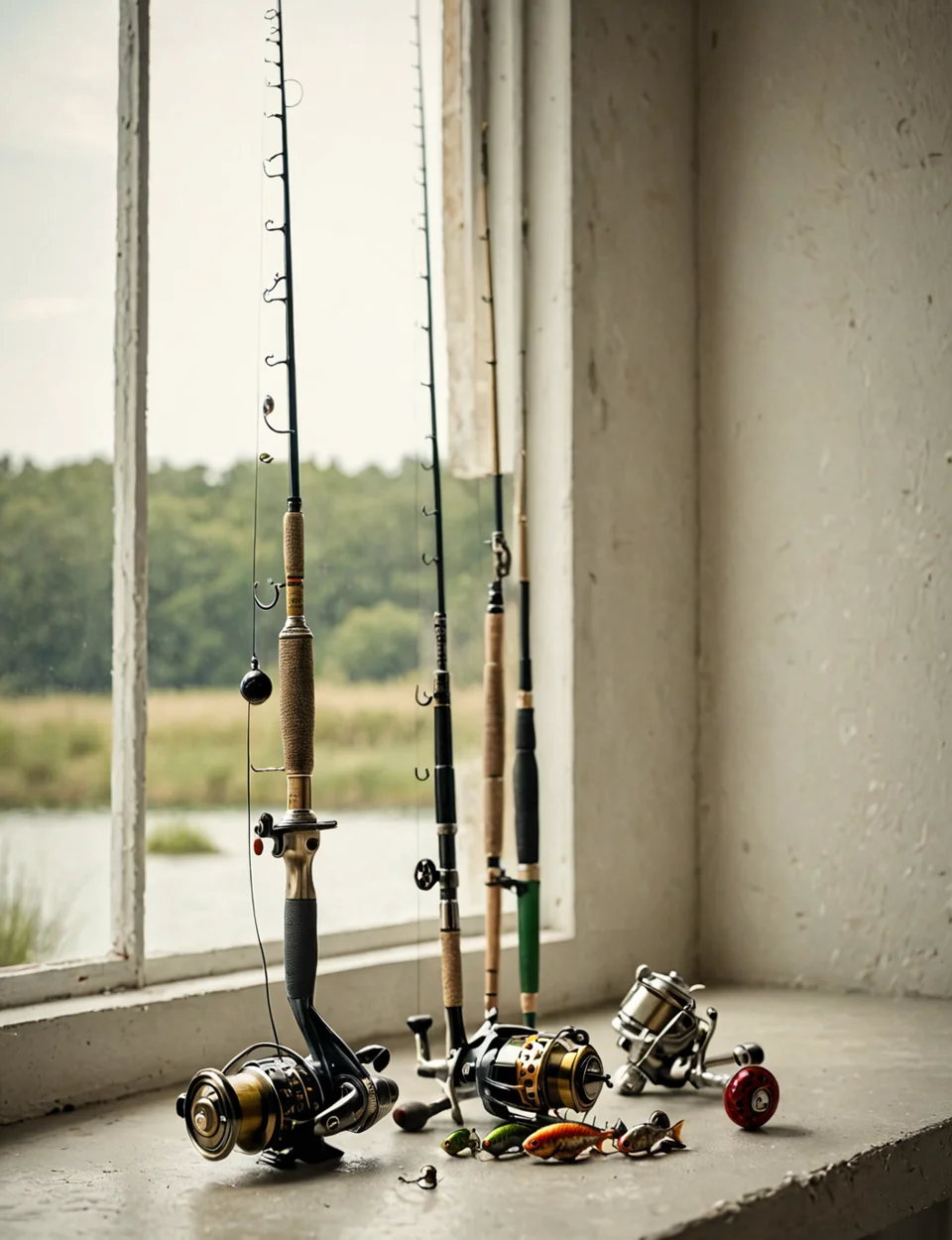
Rod power describes how much force it takes to bend the blank; rod action describes where along the blank it bends. Buy for power first, action second, because power sets the range of lures and line you can fish at all, while action sets how the rod feels while you do it. Manufacturers label power on a scale from ultralight to heavy, and that label is your only reliable guide to lifting strength and resistance to bending before you pick the rod up.
A fast-action rod bends mostly in the top third near the tip. That gives you a quick, crisp hookset and lets you feel a jig tick bottom in current, which is why fast and extra-fast actions dominate finesse work and single-hook presentations. The cost is a stiffer-feeling rod that loads less easily on short casts and punishes you on light line — a fast heavy rod with a big hook is a hook-tearing machine on soft-mouthed fish. A slow or moderate action rod bends farther down toward the butt. It casts lighter weights more smoothly, protects light tippet and small hooks, and keeps a hooked fish pinned because the whole blank absorbs the head shakes. The trade-off is a softer hookset and less immediate feedback, and long, accurate casts with heavy lures get mushy.
Where people go wrong is buying action as a substitute for power. A moderate-action ultralight and a fast-action medium-light are not interchangeable even if both throw the same lure weight — one is a panfish and trout rod that forgives mistakes, the other is a bass and walleye rod that rewards precision. If you only own one rod, a medium-power fast action covers the widest middle ground, and it will be genuinely bad at exactly two things: throwing the heaviest lures in your box and protecting the finest line you own.
Fly fishing is its own tackle system, not a variant of spin fishing
Fly fishing uses a specialized fly rod, fly reel, and a weighted fly line to cast artificial flies that imitate aquatic insects and other prey, typically in freshwater rivers, streams, and lakes. The U.S. Fish and Wildlife Service describes it as a distinct technique requiring its own tackle and skills, and that is the honest framing: the line carries the fly, not the lure's weight, so the entire casting stroke is different from anything you do with a spinning reel.
The practical consequence is that you cannot half-adopt it. A fly rod needs a matching weight-forward or double-taper line, a reel that mostly stores line and provides drag on big fish, and a leader and tippet system tapered down to a diameter fine enough to fool a fish that spends its life inspecting drift. Buying a cheap fly outfit and a handful of dry flies gets you casting in an afternoon and catching at a much slower rate, because the skill is in the presentation — the mend, the drift, the drag-free float — and that takes repetition on water, not gear.
It is often practiced as catch-and-release sport fishing, and the tackle reflects that: barbless hooks, rubber nets, and wet hands. That ethic is not a rule everywhere and not every fly angler follows it, but it is the norm on the trout streams where fly fishing concentrates, and it is worth knowing before you show up with a stringer.
Fly fishing is the wrong choice when you want to cover water fast, fish deep structure in wind, or chase species that respond to reaction strikes rather than presented food. It is the right choice when the fish are feeding selectively on small prey, when the water is shallow and clear and a lure splash spooks everything, or when the act of casting is part of why you came.
Ice fishing: the season that rewards patience and punishes assumptions
Ice fishing is recreational fishing through holes cut in the ice covering a frozen body of water, using specialized gear and following specific ice-thickness safety guidelines issued by agencies such as state departments of environmental conservation and the U.S. Fish and Wildlife Service. The safety numbers are not suggestions and they are not uniform across activities — they scale with weight, and the gap between walking and driving is where people die.
| Activity on clear, solid ice |
Recommended minimum thickness |
| New, clear ice for any activity on foot |
4 inches |
| General safety threshold before going onto the ice |
3–4 inches |
| Walking while ice fishing |
4 inches |
| Snowmobiles |
5–7 inches |
| Cars or small pickups |
8–12 inches |
Read that table as a set of floors, not targets. The 3–4 inch general threshold and the 4 inch figure for walking are close enough that a group spreading out on a lake can put someone over thinner ice than they checked. The 5–7 inch snowmobile range and the 8–12 inch vehicle range assume clear, solid ice — and the qualifier is doing enormous work in that sentence. Clear ice is strong; white, slushy, refrozen, or layered ice is not, and thickness measured on a bad sheet tells you almost nothing about whether it will hold you.
The gear follows from the access problem. You are fishing vertically through a hole, so you need a short jigging rod with enough backbone to set a hook straight up, a reel that survives freezing, a hand or power auger, a scoop to clear slush, and some way to stay warm and off the wind. Electronics — a flasher or sonar unit — are the single biggest catch-rate upgrade because they tell you whether anything is under you at all, which on a featureless flat is the whole question. The cost is real: a flasher and a shelter and a power auger add up fast, and none of it helps if you are fishing a lake with poor fish density.
What goes wrong is usually timing and mobility, not tackle. Early ice and late ice are the productive windows and also the dangerous ones, and the anglers who do best drill many holes and move until they find fish rather than sitting on a spot out of stubbornness. If you are not willing to move, ice fishing is a cold way to not catch anything.
Line, leader, and the invisible decisions that lose fish
Line diameter is the most consequential thing most anglers under-think. Lighter line casts farther, sinks faster, and gets more bites; it also breaks more often, and the break usually happens at the worst possible moment — the hookset, the net, the log. Every line choice is a bet on how big the fish you might hook is versus how many fish you want to hook at all.
The materials sort into three families. Monofilament is cheap, stretches, and floats, which makes it a fine choice for topwater and a poor one for deep jigging where stretch dulls the feel. Fluorocarbon is denser and less visible, sinks, and resists abrasion better, which is why it earns its price as a leader or tippet material around rocks and clear water; as a main line it is stiff and expensive and holds memory. Braid has almost no stretch and very small diameter for its strength, so it transmits feel and cuts current, but it is visible, it winds badly on cheap reels, and it needs a leader because fish see it and because it has no shock absorption.
The sequence that matters is main line to leader to hook, and each junction is a failure point. A braid-to-fluorocarbon connection knot that you tie badly will cost you the fish of the day and you will never know it was the knot rather than the hookset. Practice the connection until you can tie it in the wind, and re-tie after every fish or every snag — abrasion you cannot see is the most common cause of a break on a fish that felt solid right up until it wasn't.
There is a real argument for skipping the complexity: a single spool of monofilament in a sensible strength, tied directly to the lure, catches fish and costs almost nothing. It is the right call for a beginner, for kids, and for anyone fishing murky water where visibility is irrelevant. It is the wrong call when the water is clear, the fish are pressured, or you are fishing deep enough that stretch costs you feel.
Reading water and timing: the part no tackle fixes
Fish position themselves where current, cover, and food intersect, and finding that intersection is worth more than any upgrade in your box. In a river, that means seams where fast water meets slow, the cushion in front of a boulder, the soft pocket behind it, and the tail of a pool where food collects. In a lake, it means weed edges, points, drop-offs, and shade — structure that breaks the flatness and gives a fish a reason to hold.
Timing sits on top of that. Low light at dawn and dusk concentrates feeding activity across most freshwater species because prey are more exposed and predators can hunt without being seen. Cold fronts shut things down; a stable or rising barometer and a couple of days of consistent weather put fish back on the feed. Water temperature governs everything in the cold-blooded world — a species that is active and aggressive in warm water can be nearly dormant a few degrees colder, and no lure changes that. You can fish a perfect presentation through a cold front and catch nothing, and the correct response is to slow down, downsize, and fish deeper rather than to change lures repeatedly.
The honest limit on all of this is local knowledge. Published seasonal patterns are averages across a species' entire range, and the lake in front of you may not read the book. The fastest way to shorten the learning curve is to fish the same water repeatedly across a season and keep notes on depth, temperature, and what worked — not because notebooks are magic, but because a pattern you found yourself is one you can trust when the fishing gets hard.
What this all costs, and when the simple answer is the right one
You can fish well for the price of a rod, a reel, a spool of line, and a handful of hooks. Everything beyond that buys a narrower advantage: a second rod buys a second presentation, a flasher buys information under the ice, a boat buys range, and a fly outfit buys a different relationship with the water. None of it buys fish on its own, and buying gear to solve a problem you have not diagnosed is the most common way anglers waste money.
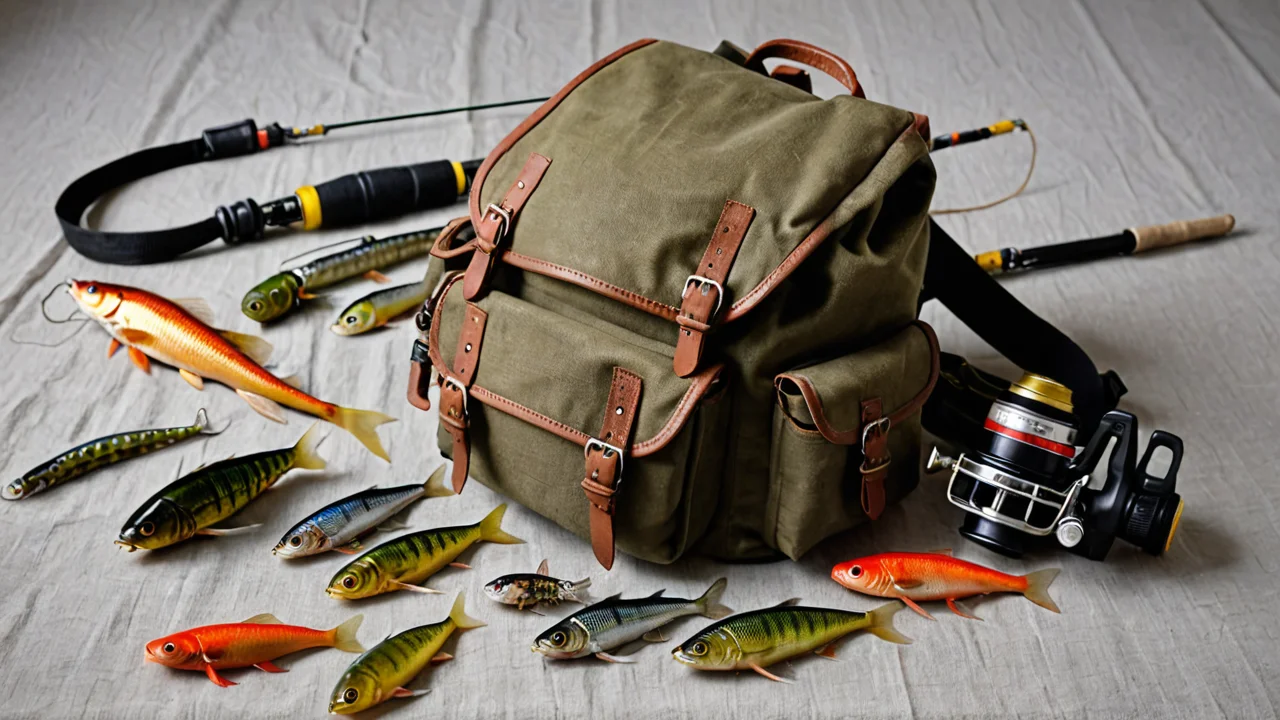
The order that works is: learn to read one body of water, learn one technique well enough to catch consistently on it, then add the second technique that covers the conditions the first one cannot. For most freshwater anglers in the U.S., that means a medium-power spinning rod and a handful of soft plastics and jigs before anything else, because it covers the widest range of species and conditions at the lowest cost. Add fly fishing when you want to present small imitations to selective fish in shallow water. Add ice fishing when you want to keep fishing through the winter and are willing to treat ice safety as a hard constraint rather than an inconvenience.
The trade-offs are honest ones. Specialization catches more fish on the days it fits and leaves you idle on the days it doesn't. Versatility keeps you fishing but rarely optimally. The anglers who catch consistently are not the ones with the most tackle; they are the ones who know which of their few setups is right for the water in front of them today, and who are willing to move when the answer is none of them.