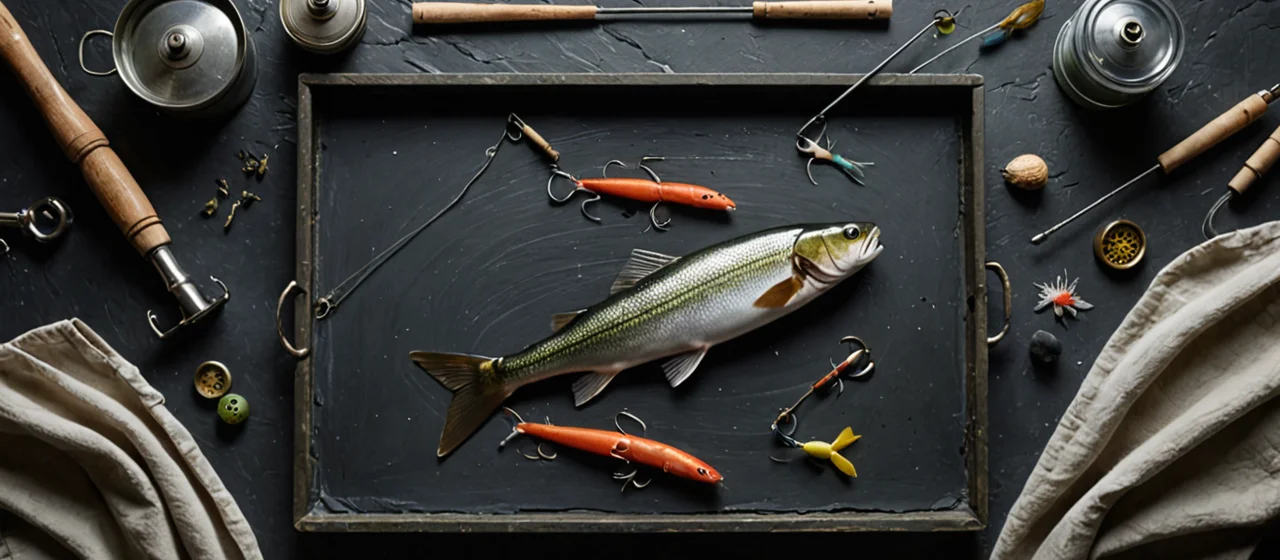
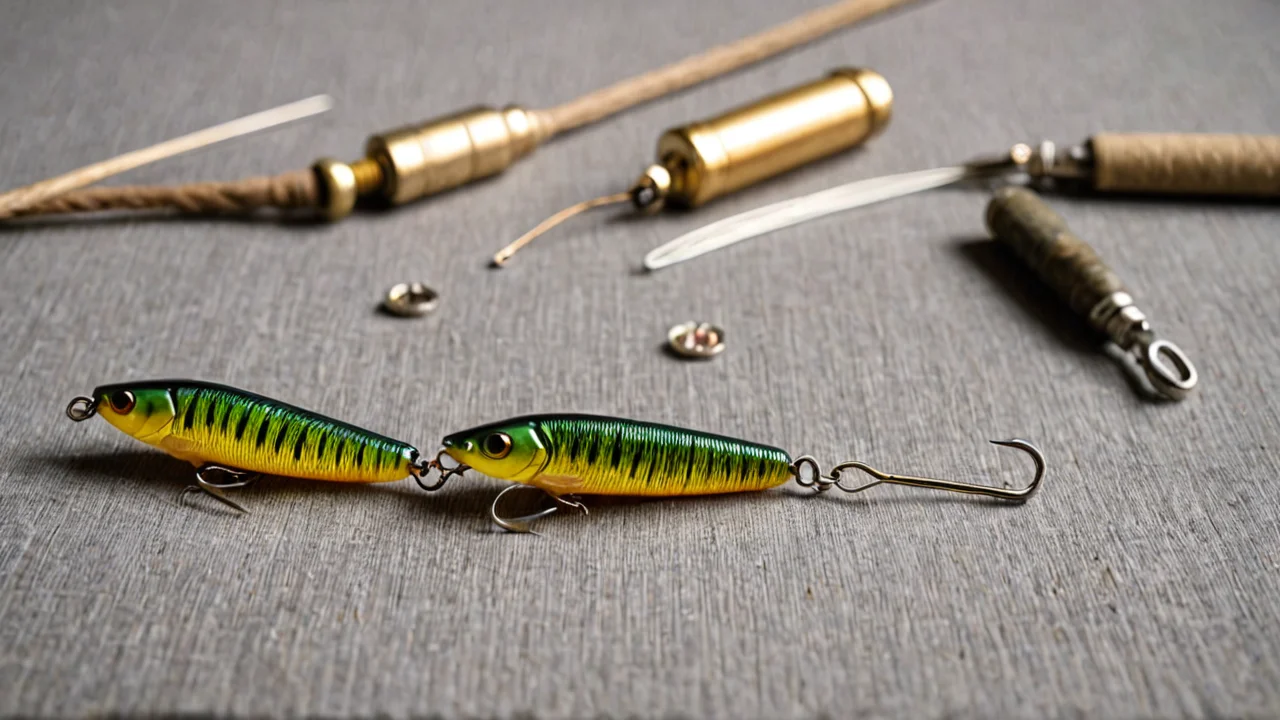
Preparation and outfitting is the discipline of matching your tackle, your safety margin, and your access to the water you actually plan to fish — and the single most consequential decision in the whole subject is ice thickness, because a wrong call on a frozen lake is the one mistake no rod, fly, or lure can fix. New, clear ice is generally considered safe to walk on at 3–4 inches; 4 inches is the recommended minimum for ice fishing or any activity on foot; snowmobiles want 5–7 inches of clear, solid ice; and cars or small pickups want 8–12 inches. Everything else on this page is about the choices that sit downstream of getting there and back safely: which rod, which line, which tackle, which sequence of loading and rigging.
Reading the ice before anything else
Treat ice thickness as the gate on every winter trip. The working numbers are straightforward: 4 inches of new, clear ice is the recommended minimum for ice fishing or other activities on foot, and the general safety recommendation for new, clear ice before going onto it is 3–4 inches. For machines, clear, solid ice should be 5–7 inches for snowmobiles and 8–12 inches for cars or small pickups.
Those figures apply to clear, solid ice. That qualifier is doing enormous work. Clear ice is the black, glassy ice that forms directly from freezing water; it is dense and strong. White, cloudy ice forms when snow falls onto slush or when water freezes with air trapped inside, and it is weaker per inch. Ice that has been through a thaw, refrozen, or been honeycombed by sun is weaker again. The numbers above are the best case, not the average case.
Three things go wrong repeatedly. The first is treating early-season ice as uniform: a lake can carry 5 inches in the bay you walked out from and 2 inches over a spring or current channel a hundred yards out. The second is late-season ice that measures thick on a tape but has lost its internal structure — you notice it as gray, porous, or candled ice, and it fails under far less load than clear ice of the same depth. The third is driving on too early because a neighbor did; the 8–12 inch threshold for a small pickup is not a suggestion.
The practical sequence is: check with the local state agency's ice report before you leave, measure on foot with a spud bar as you go, and treat any measured thickness as a ceiling on what the ice might be, not a floor. A spud bar is the cheapest piece of outfitting you'll ever buy and the one that most changes your odds.
Choosing a rod: power and action are two different decisions
Rod power and rod action are separate specifications, and confusing them is the most common tackle mistake. Power describes how much force is required to bend the rod — manufacturers label it on a scale from ultralight to heavy, and it indicates the rod's lifting strength and resistance to bending. Action describes where along the blank the rod bends under load, ranging from slow to extra-fast; a fast-action rod bends mostly in the top third near the tip, while a slow or moderate-action rod bends farther down toward the butt section.
In practice, power is your fighting-tool choice and action is your casting-and-hookup choice. A heavy-power rod lets you put pressure on a big fish and pull it away from cover; an ultralight bends deeply under a modest fish and protects light tippet. A fast-action rod loads quickly and gives crisper, more accurate casts at distance; a moderate or slow action loads more gradually, which suits short casts, roll casts, and situations where you want the rod to absorb a surge rather than transmit it.
The trade-off is real in both directions. Buying a fast-action heavy rod because it feels "versatile" usually produces a rod that fishes neither light presentations well nor heavy cover well — it's stiff in the wrong place. Conversely, a slow-action ultralight is delightful on small fish in open water and close to useless when you need to drive a hook through a hard mouth or turn a fish out of structure.
For fly fishing specifically, the outfit is its own system: the U.S. Fish and Wildlife Service describes fly fishing as a distinct technique requiring its own tackle and skills, using a specialized fly rod, fly reel, and a weighted fly line to cast artificial flies that imitate aquatic insects and other prey, typically in freshwater rivers, streams, and lakes and often practiced as catch-and-release sport fishing. That weighted line is the reason fly rod action matters so much — the rod has to load against the line's mass, so a mismatched action makes casting feel like work rather than timing.
Matching line, leader, and tippet to the rod
Line weight should be chosen to load the rod, not to chase a fish size. A rod rated for a given line weight will cast that weight with the least effort; going heavier overloads the blank and slows recovery, going lighter means you're forcing the rod to load and the loop collapses. If you're buying your first outfit, pick the rod first and let its rating drive the line, not the reverse.
The leader and tippet are where preparation actually shows up on the water. A leader that's too short or too heavy for the fly turns over hard and slaps the water; one that's too long for the rod's action and your casting ability tangles in the wind and refuses to straighten. Tippet diameter is the last decision, and it's a trade: finer tippet gets more strikes from pressured fish and breaks more often. Carry tippet in two or three sizes rather than one, and re-rig when the tippet gets abraded rather than hoping it holds.
For conventional tackle, the same logic applies to line diameter versus rod power. Heavy braid on a light-power rod will transmit shock the blank can't absorb; light mono on a heavy rod will fail before the rod comes close to its limit. Match them and the rod does the work.
The winter outfit: shelter, auger, and the gear that keeps you fishing
Ice fishing is a form of recreational fishing where anglers fish through holes cut in the ice covering a frozen body of water, using specialized gear and following specific ice-thickness safety guidelines issued by agencies such as state departments of environmental conservation and the U.S. Fish and Wildlife Service. The outfit list is longer than open-water tackle because the environment is the constraint, not the fish.
- Cutting: a hand auger is cheap, quiet, and adequate for a few holes; a power auger is the answer when you're drilling many holes to find fish or when the ice is deep into the season. The cost is weight, fuel or battery, and noise.
- Shelter: a flip-over or pop-up shelter extends your day in wind and keeps the hole from refreezing. The trade-off is that a shelter slows you down — if you're hole-hopping aggressively, a shelter you set up and break down every twenty minutes is a liability.
- Safety gear: ice picks worn around the neck, a spud bar for testing, and a throw rope. These are non-negotiable and cheap relative to everything else you'll buy.
- Flotation: a float suit or a worn PFD. On early and late ice this is the single highest-value purchase after the spud bar.
- Warmth and dexterity: mittens over gloves for travel, liner gloves for handling line and knots. You will handle wet line in freezing air; the outfit that keeps your hands working is worth more than the one that keeps them warmest.
The honest cost of ice fishing outfitting is that it's a second full kit, not an add-on to your summer tackle. If you fish ice a handful of times a season, a hand auger, a spud bar, and a modest shelter get you most of the way; a power auger and a full electronics package are for people who are out weekly. Buying the machine first and the safety gear last is backwards, and it's how people end up on 3 inches of refrozen slush.
Loading and sequencing a trip so the preparation pays off
Preparation is a sequence, and doing it out of order wastes the gear. The order that works: confirm access and conditions, then select the rod and line for the presentation you expect, then rig, then load, then re-check the safety items at the water.
Confirming conditions means ice reports or water levels or closures before you pack. Selecting tackle means deciding the presentation first — topwater, nymph, jig, bait — and letting that drive the rod, line, and terminal tackle, rather than bringing everything and choosing at the water. Rigging at home or at the vehicle in good light, with warm hands, is faster and better than rigging on a windblown shoreline.
Loading is where most trips go wrong in small ways. Rods go in last or in a tube; hooks get secured; line gets checked for nicks before it's spooled off. On ice, the sequence includes measuring thickness with the spud bar before you commit your weight and gear to the surface, and setting the shelter before you drill so you're not fighting wind with a running auger.
The limit of all this sequencing is weather. A plan built on a calm-day rigging session falls apart in a sudden front, and the right call then is to simplify — fewer rods, one presentation, less gear — rather than to force the plan. Preparation buys you options; it doesn't buy you conditions.
What each choice costs you, and when the whole approach is wrong
Every outfitting decision trades money, weight, or time against capability, and the honest version of the trade is worth stating plainly.
| Decision | What you gain | What it costs |
|---|---|---|
| Fast-action rod | Crisper, more accurate casts at distance; quicker hooksets | Less forgiveness on short casts and light tippet; harder to feel a slow take |
| Heavy rod power | Control in cover; ability to turn big fish | Poor feel on small fish; overkill for open water |
| Power auger | Many holes, less effort, deeper ice | Weight, fuel or battery, noise, maintenance |
| Flip-over shelter | Warmth, wind protection, longer days | Slower mobility; setup time between spots |
| Float suit | Survivability if you go through | Bulk; not a substitute for measuring ice |
The approach is wrong when the safety margin is being traded for fishing time. If you're drilling on ice below the recommended thresholds — under 4 inches for foot travel, under 5–7 inches for a snowmobile, under 8–12 inches for a car or small pickup — no amount of tackle preparation compensates. The same is true of a rod-and-line outfit chosen for versatility over fit: if you can't say what presentation your rod is built for, it isn't prepared, it's just assembled.
What preparation actually buys is a shorter distance between noticing a problem and fixing it — a spare tippet spool, a second rod already rigged, a spud bar in hand instead of in the truck. That's the whole discipline, and it's the same on a frozen lake in January as it is on a tailwater in June.
Spooling line so it doesn't betray you later
Fill a spinning reel to within about a sixteenth of an inch of the spool lip, and a baitcaster to roughly the same gap, then stop — overfilling is the most common cause of the birds-nest on the first cast of a trip. Underfilling costs you distance because the line has to climb over the lip on every rotation, and it drags. The gap is the whole trick, and you can check it by eye rather than by measurement.
Line has memory, and cold makes it worse. Monofilament that has sat on a spool through a winter comes off in coils; stretch it against a soft load before you fish it, or respool. Braid doesn't coil but it does go limp and fade, and a faded braid is telling you it has lost abrasion resistance. Fluorocarbon is the one to watch for stiffness — a stiff spool casts badly and knots poorly, and you notice it as a fly or lure that won't turn over rather than as anything obviously wrong with the line.
Backing matters more than people think. On a fly reel, the backing is what lets a running fish take line without spooling you, and it's also what sets the diameter the line sits on, which affects how fast the reel picks up. On conventional reels, a layer of mono under braid stops the braid from spinning on the spool under load — cheap insurance that costs you a few yards of capacity.
Rigging at home beats rigging in the wind
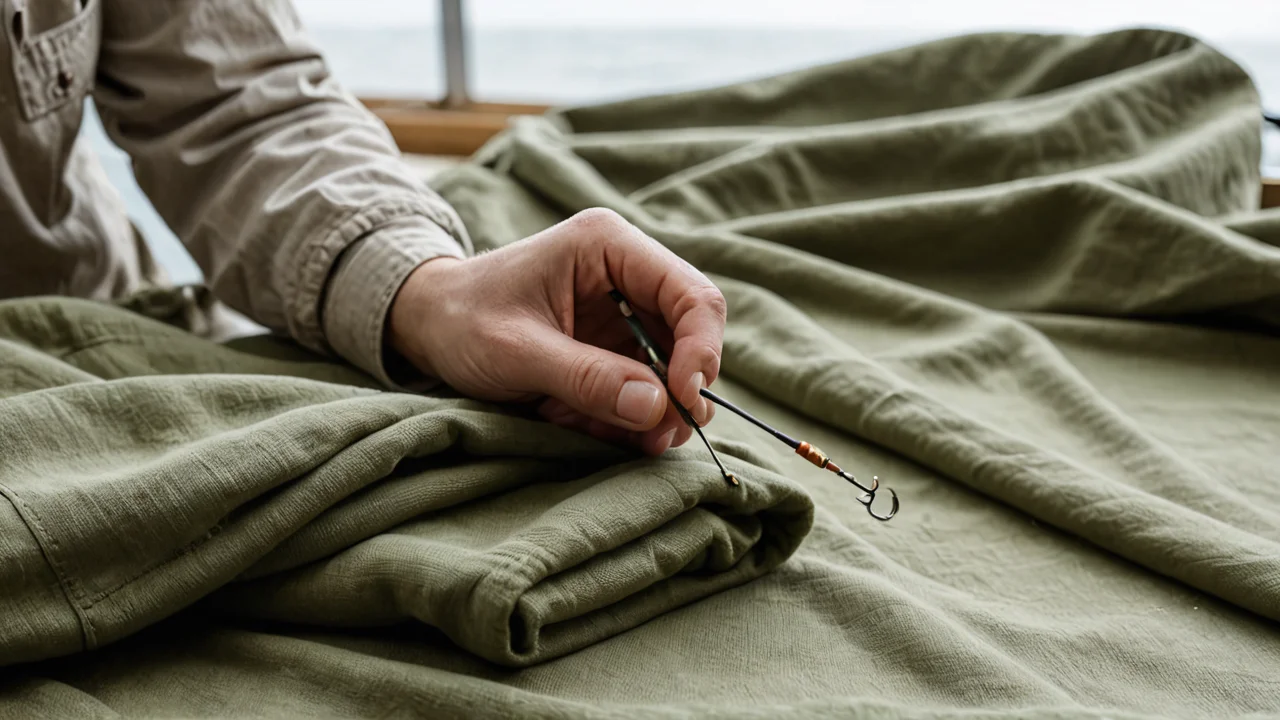
Tie your terminal tackle before you leave — leaders, droppers, snaps, and spare rigs — because knot strength drops when your hands are cold and the light is flat. A rig tied at a bench gets checked; a rig tied on a tailgate in a crosswind gets guessed at. Carry pre-tied leaders in a wallet or on a foam spool, and treat a kinked or abraded leader as spent rather than retying it in the field.
The sequence that holds up: build the rig, wet every knot before you seat it, then test it with a steady pull rather than a jerk. A knot that slips under a slow pull was going to slip on a fish. Trim tags close but not flush — a tag cut into the knot body is a weak point you can't see.
Hooks deserve the same attention. A hook point that drags across a thumbnail instead of catching it needs sharpening or replacing, and a hook that has been in a fish's jaw or a rock is suspect no matter how it looks. Carry a file and spare hooks in the sizes your presentations actually use, not a broad assortment you'll never open. The limit of all this prep is that it buys you fewer failures, not none — line still breaks, and the point of rigging well is that when it does, you know it was the fish and not the knot.